


If you’ve been following Toyota Highlander news lately, you already know something significant is coming. The shift from the 2026 model to the 2027 isn’t a minor refresh. It’s one of the most meaningful changes the Highlander has seen in years, and the heart of that change is the powertrain itself.
Whether you’re shopping right now or trying to decide if the 2027 is worth the wait, here’s a clear breakdown of how these two generations actually compare. You can also browse our current 2026 Highlander inventory if you want to see what’s available in Tacoma today.
The Biggest Change Between Generations: Gas and Hybrid vs. Fully Electric
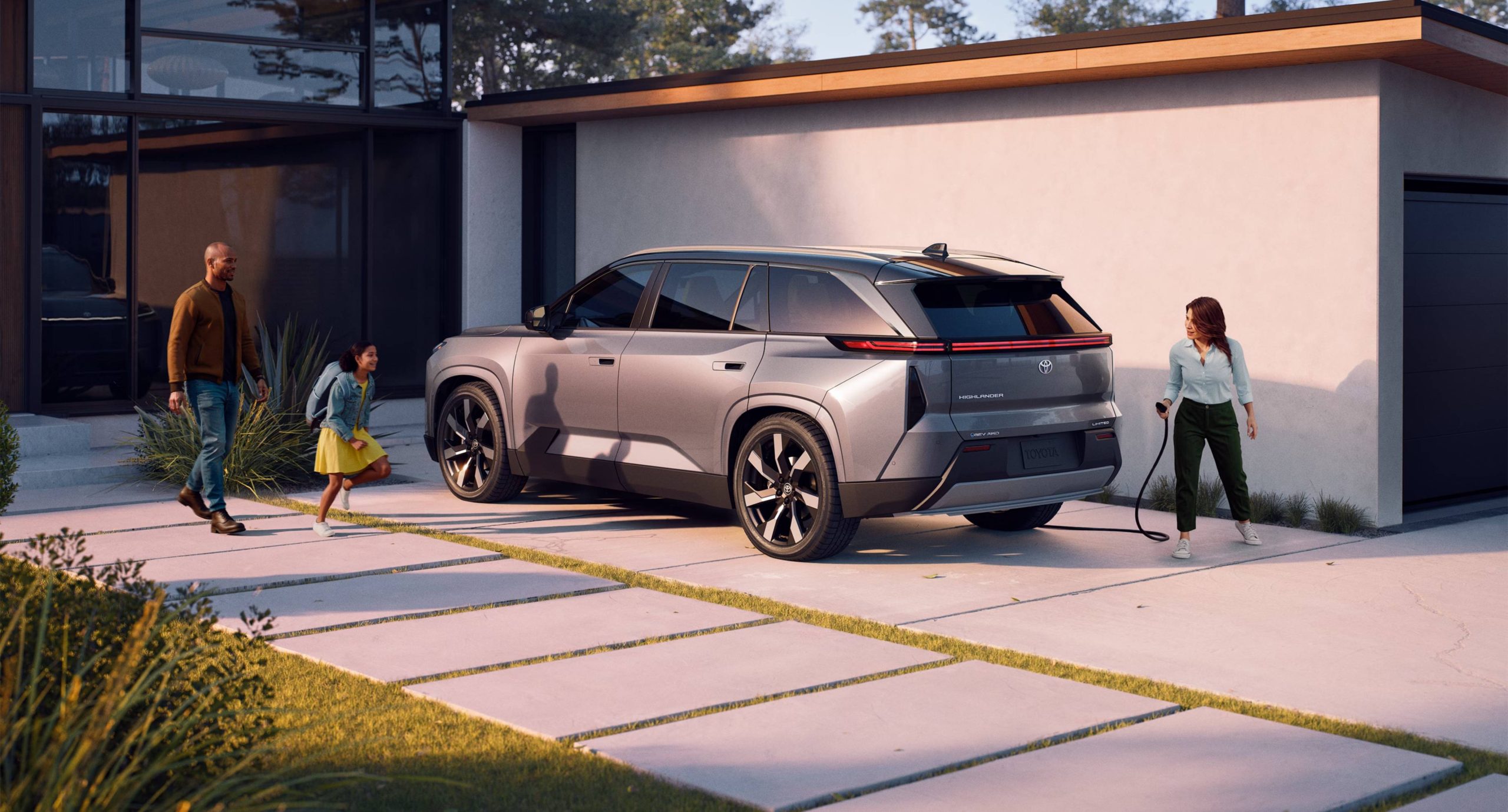
The headline difference isn’t a new color or a bigger screen. It’s the powertrain. The 2026 Toyota Highlander continues as a gas-powered and hybrid SUV, while the 2027 Highlander is expected to arrive as Toyota’s first fully electric BEV in this segment. That’s a fundamental shift in how the SUV is designed, driven, and refueled.
This raises real questions for buyers. Do you want proven powertrain options you can drive home today, or are you ready to commit to an all-electric Highlander when it arrives?
2026 Highlander Powertrain Options
The 2026 gives buyers two powertrain paths. The gas configuration pairs a 2.4-liter turbocharged 4-cylinder, producing 265 horsepower and 310 lb-ft of torque, with an 8-speed automatic transmission and standard AWD. Gas trims span XLE, XSE, Limited, and Platinum.
The hybrid uses a 2.5-liter 4-cylinder paired with electric motors, producing 243 combined horsepower through a CVT, also with standard AWD. The big draw is efficiency: up to 35 MPG combined, which makes it a genuinely practical choice for families covering real distances around Puyallup, Lakewood, or Gig Harbor. Hybrid trims are available in XLE, Limited, and Platinum.
2027 Highlander: Toyota’s First BEV Highlander
Based on official announcements, the 2027 Toyota Highlander is expected to arrive fully electric in two configurations. The base XLE uses a single front-mounted motor producing 221 horsepower and 198 lb-ft of torque, paired with a 77-kWh battery and an estimated 287 miles of range. Worth noting: this base configuration is FWD rather than AWD, which is a reversal from what the 2026 offers as standard.
The AWD configuration steps up considerably. Toyota expects dual motors producing 338 horsepower, with 198 lb-ft of torque from the front motor and 125 lb-ft from the rear motor, a larger 95.8-kWh battery, and an estimated 320 miles of range. For buyers who want both performance and all-weather capability, that AWD setup is genuinely compelling.
Driving Range: Fueling Up vs. Plugging In
The daily ownership experience will feel different in one very immediate way: how you replenish range. With the 2026 gas or hybrid models, you’re stopping at a gas station for a few minutes. The hybrid’s 35 MPG efficiency means fewer stops overall, and the turbocharged gas engine keeps performance strong without hurting you too badly at the pump.
The 2027 changes that dynamic entirely. Toyota expects DC fast charging to bring the battery to 80% in roughly 30 minutes, with Level 2 home charging available for overnight top-ups. For most drivers in the Tacoma area, starting every morning with a full charge is genuinely convenient. If you’re commuting from Federal Way or Olympia daily, plugging in overnight and waking up to 287 to 320 miles of range may fit your routine well.
The practical question is charging infrastructure readiness. Fast charging stations are expanding across the region, but setting up home charging is an upfront consideration worth thinking through before the 2027 arrives.
Trim Levels: A Broader 2026 Lineup vs. a Streamlined 2027
2026 Highlander Trim Structure
The 2026 Highlander offers four gas trims (XLE, XSE, Limited, Platinum) and three hybrid trims (XLE, Limited, Platinum), giving buyers real room to match features to budget. That breadth is useful if you want a precise fit without overpaying for things you don’t need.
We currently have several of these grades in stock, so explore available 2026 Highlander models to see what’s on the lot right now.
2027 Highlander’s Two-Grade Structure
The 2027 trims down to just two grades: XLE and Limited. That’s a significant simplification, but both grades are expected to be well-equipped from the start. Less decision fatigue, and Toyota has concentrated a strong feature set into each rather than spreading things thin across many tiers.
The XLE is expected to include a 14.0-inch touchscreen, a 12.3-inch digital gauge cluster, wireless charging pads, USB-C ports throughout the cabin, and Toyota Safety Sense 4.0. The Limited adds a head-up display, ventilated front seats, heated second-row seats, rear sunshades, Advanced Park, Traffic Jam Assist, a Panoramic View Monitor, Lane Change Assist, Front Cross Traffic Alert, and side-view mirrors with memory and reverse tilt.
Both grades are expected to offer 64-color customizable ambient lighting with six mood settings and an available fixed glass panoramic roof that Toyota describes as the largest in its lineup.
Passenger Capacity and Third-Row Space
Both the 2026 and 2027 Highlanders are designed as three-row SUVs. The 2026 can seat up to eight passengers with an available second-row bench seat, while the 2027 seats up to seven, with six as standard (second-row captain’s chairs) and an available bench seat bringing that to seven. The 2026 already earns solid marks for third-row usability within its class.
Cargo figures reflect the roomier platform as well. Toyota expects 15.9 cubic feet behind the third row and over 45 cubic feet when the third row is folded flat. For families loading up for a weekend in Gig Harbor or a longer road trip, that capacity matters.
Technology and Infotainment: What’s Changing
The 2026 Highlander delivers a capable tech package for its generation: Toyota’s current infotainment system, Apple CarPlay, Android Auto, and Toyota Safety Sense 2.5+, covering pre-collision warning, lane departure alert, automatic high beams, and radar cruise control.
The 2027 takes a clear step forward. The upgrade to Toyota Safety Sense 4.0 brings meaningfully enhanced driver assistance over what the 2026 offers, and the 14.0-inch touchscreen with a 12.3-inch digital gauge cluster on the base XLE alone makes the cabin feel considerably more modern. The Limited’s additions, including Traffic Jam Assist, Lane Change Assist, and the Panoramic View Monitor, push the driver-assist package into territory that would’ve been premium-only just a few years ago.
For tech-forward buyers, the 2027 is a more future-oriented platform. For buyers who want a capable, well-rounded SUV today, the 2026’s technology holds up well.
Should You Buy the 2026 Now or Wait for the 2027?
This is the question we hear most from Highlander shoppers right now, and honestly, the answer depends on your situation.
If you need a reliable, versatile three-row SUV in the near term, the 2026 is a strong choice without compromise. The hybrid’s 35 MPG combined, standard AWD across both powertrains, and a full four-trim lineup give you real flexibility. Families who need a vehicle before late 2026 or early 2027, when Toyota expects the new model to arrive, shouldn’t feel like they’re settling.
If you’re drawn to the BEV ownership experience, excited about the 2027’s expanded dimensions, or specifically want Toyota Safety Sense 4.0 and the updated tech package, waiting makes sense if your timeline allows. The key practical question is EV readiness: do you have access to Level 2 home charging, and are you comfortable with the DC fast charging infrastructure available in the Tacoma area? If yes to both, the 2027’s estimated 320 miles of AWD range and 30-minute fast-charge capability start to look very practical for everyday life.
Buyers with timeline flexibility who genuinely want to go all-electric have good reasons to wait. Buyers facing an expiring lease, an aging vehicle, or an immediate need for third-row capacity will find the 2026 ready to deliver right now.
Schedule a Toyota Highlander Test Drive at Titus-Will Toyota
The most useful thing you can do at this stage is get behind the wheel. At Titus-Will Toyota, you can experience the 2026 Highlander firsthand, sit in all three rows, and get real answers about what fits your family’s life.
Titus-Will Toyota has been serving the Tacoma community and the broader South Puget Sound area since 1938. The dealership is located at 3506 S Sprague Ave in Tacoma, WA, and the team offers a straightforward, no-pressure environment where your questions get direct answers. Showroom hours are Monday to Friday, 9:00 AM to 8:00 PM; Saturday, 9:00 AM to 7:00 PM; and Sunday, 10:00 AM to 6:00 PM.
Whether you’re ready to move forward on a 2026 today or want to talk through the 2027 timeline, we’re happy to help. Contact our team to schedule a test drive or ask questions about either model. There’s no better way to make a confident decision than talking to people who actually know these vehicles well.
Connect with us


