


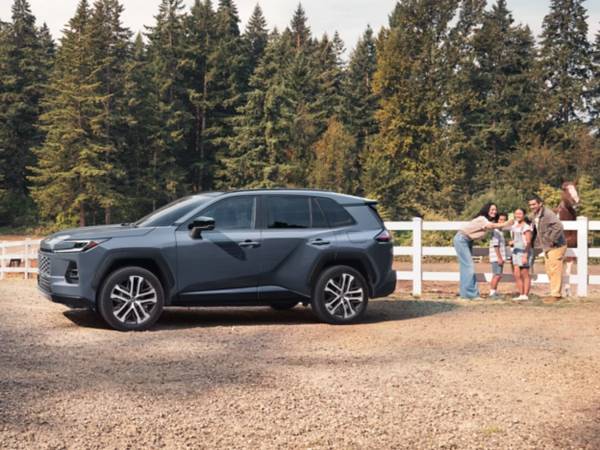
Compact SUVs occupy a sweet spot that’s genuinely hard to find elsewhere in the market. You get real-world practicality without sacrificing fuel economy, and enough comfort that the daily commute doesn’t wear on you. Two of the strongest options in this segment for 2026 are the Toyota RAV4 and the Kia Sportage, and if you’ve got both on your list, you’ve already done your homework.
Both are capable SUVs with real appeal. The Sportage brings stylish design and value-conscious features, while the RAV4 leans into its reputation for reliability and hybrid-first performance. Put them side by side, and the differences matter more than they might initially appear. This guide breaks down how they compare across performance, space, tech, and long-term value to help you decide which one actually fits your life.
Performance and Powertrain: How These Two SUVs Stack Up
Powertrain choices shape the entire ownership experience. Fuel costs, driving feel, long-term confidence behind the wheel all trace back to what’s under the hood.
Toyota Goes Hybrid-Only
For 2026, Toyota made a bold move with the RAV4: it’s now a hybrid-only model. The RAV4 Hybrid produces 226 hp in FWD configuration and 236 hp with AWD. For drivers who want even more capability, the RAV4 Plug-in hybrid reaches 324 combined hp. Toyota has been refining hybrid systems since the late 1990s, and that depth of development shows in how the RAV4 drives.
Kia’s Powertrain Options
The Kia Sportage offers more powertrain variety. The standard gas engine produces 187 hp, while the Sportage Hybrid steps up to 232 hp. That flexibility appeals to buyers who prefer a conventional drivetrain or want to choose their level of electrification. When comparing the hybrid variants directly, though, the RAV4 Hybrid’s more powerful and better-developed system gives it a noticeable edge in real-world responsiveness.
Towing Capacity: Where the RAV4 Pulls Ahead
Towing is one of the clearest advantages in this comparison. The RAV4 can tow up to 3,500 lbs when properly equipped with AWD, or 1,750 lbs in FWD configuration. The Sportage Hybrid tops out at 2,000 lbs, and the gas Sportage reaches 2,500 lbs.
For outdoor enthusiasts in the Pacific Northwest who haul boats, campers, or equipment trailers, that gap is meaningful and worth factoring into the decision.
Cargo and Interior Space: Room for Your Real Life
Interior space is one of the most scrutinized categories in any vehicle comparison, and the Sportage holds a genuine edge here. Behind the rear seats, the Sportage offers 39.5 cubic feet of cargo space, expanding to 73.7 cubic feet with the rear seats folded. The RAV4 comes in at 37.8 cubic feet behind the rear seats and 70.4 cubic feet fully folded, a real difference, though not a dramatic one in daily use.
Toyota designed the RAV4’s cargo area with a practical, square floor that makes packing efficient, and the cabin layout is well-organized for families loading gear on the way to the trailhead. The Sportage may offer more raw cubic footage on paper, but real-world usability in the RAV4 is competitive. Rear seat passengers may find slightly more legroom in the Sportage on longer drives, and that’s worth acknowledging honestly.
For most day-to-day use, school runs, grocery stops, weekend road trips, the RAV4’s cabin is generous and well-organized.
Technology and Infotainment: Smarter Where It Counts
Both vehicles come loaded with modern technology. Kia equips the Sportage with a standard 12.3-inch touchscreen and a 12.3-inch digital instrument cluster, along with standard wireless Apple CarPlay and Android Auto. The layout feels modern and easy to navigate.
The RAV4 comes standard with a 10.5-inch touchscreen, with a 12.9-inch display available on higher trims. It also features a 12.3-inch digital instrument cluster across all models, plus wireless Apple CarPlay and Android Auto compatibility and over-the-air update capability. The Sportage’s standard screen is larger, which is worth noting. The RAV4’s infotainment system, though, is stable and responsive. For buyers who want their tech to work without fussing over it, the RAV4 delivers that consistently.
On the safety technology front, Toyota Safety Sense is standard across every RAV4 trim. Lane departure warning, automatic emergency braking, and adaptive cruise control are all included even on entry-level configurations. Kia DriveWise provides a comparable suite on the Sportage. Both vehicles take driver assistance seriously, and neither buyer has to pay extra to get meaningful safety coverage.
Reliability and Long-Term Value: The Toyota Advantage
When buyers ask which brand holds up better over time, reliability is where Toyota consistently wins the argument. Toyota’s track record for building durable, long-lasting vehicles is among the most well-documented in the automotive industry. The RAV4 specifically has ranked among the most reliable compact SUVs on the market across multiple model years, with strong scores from J.D. Power quality studies and consistently high owner satisfaction ratings.
Resale value follows reliability closely, and the RAV4 holds its value exceptionally well. That translates to a lower total cost of ownership when you factor in depreciation alongside fuel costs and maintenance. Kia has improved its reliability standing in recent years, and the Sportage is a better-built vehicle than its predecessors.
The RAV4’s stronger depreciation curve and longer reliability track record still make it the smarter long-term buy for drivers who plan to own their vehicle for several years or want strong trade-in value down the road.
Why the 2026 Toyota RAV4 Is the Better Choice
Looking at the full picture, the RAV4 earns its top spot for several compounding reasons. Its hybrid-only lineup delivers efficient, refined power that keeps everyday fuel costs down. With up to 3,500 lbs of towing capacity in AWD trim, it’s a genuine utility vehicle for active families, not just a commuter. The reliability record and resale value make it a financially sound choice over time, and Toyota Safety Sense across all trims means buyers at every price point get serious safety technology as standard.
Those advantages connect directly to how drivers in Tacoma, Puyallup, Lakewood, Gig Harbor, Federal Way, and Olympia actually use their vehicles. I-5 commuters benefit from the RAV4 Hybrid’s fuel efficiency during heavy stop-and-go traffic. Families heading to Mount Rainier or the Olympic Peninsula appreciate the towing capability and cargo flexibility. Pacific Northwest winters make AWD a practical necessity, and the RAV4’s available AWD hybrid system handles those conditions with a level of confidence the Sportage Hybrid’s lower tow rating and less-developed hybrid technology can’t fully match. For outdoor enthusiasts near Gig Harbor or heading into the Cascades, that added capability adds up across a full year of ownership.
The Sportage is a genuinely good SUV. Its cabin space, standard large touchscreen, and powertrain variety make it worth a serious look, particularly for buyers who need every inch of interior room or prefer a gas-only option. Weighed against the RAV4’s full range of ownership priorities across efficiency, towing, safety, reliability, and long-term value, though, the RAV4 consistently comes out ahead.
Schedule a Test Drive at Titus-Will Toyota
Reading specs and comparisons is a great starting point, but nothing replaces sitting behind the wheel. We’re here to help you experience the 2026 RAV4 firsthand in a no-pressure environment. Located at 3506 S Sprague Ave in Tacoma, WA, we’ve been a trusted part of the South Puget Sound community since 1938, and that history shows in how we work with every customer who comes through our doors.
Whether you want to explore the RAV4’s hybrid performance, compare available trims, or talk through your financing options, our team is ready to help. To set up your visit or ask questions before you arrive, contact our team at Titus-Will Toyota and we’ll get you behind the wheel of a 2026 RAV4.
Connect with us


